On March 12th, Andrés Borloz-Chinchilla, a member of our group, graduated with honors in Engineering Physics from Tecnológico de Costa Rica. His thesis, entitled “Characterization of asymmetries in Nuclear Magnetic Resonance line-shape spectra of chromophores induced by thermal and photo-physical effects” was conducted at the Universidad Nacional Autónoma de México (UNAM) under the co-supervision of Prof. Daniel Finkelstein-Shapiro.
In this work, Borloz-Chinchilla investigated spectral asymmetries in selected resonances of the ¹H NMR spectra of two chromophores—naphthalimide and pyranine—through a combination of computational simulations and experimental analysis. His results led to the proposal of potential molecular dynamical mechanisms underlying the observed phenomena.
A recording of the public thesis defense is available at the YouTube link provided with this note.
We warmly congratulate Andrés on this outstanding achievement and wish him continued success in his future academic and professional endeavors.
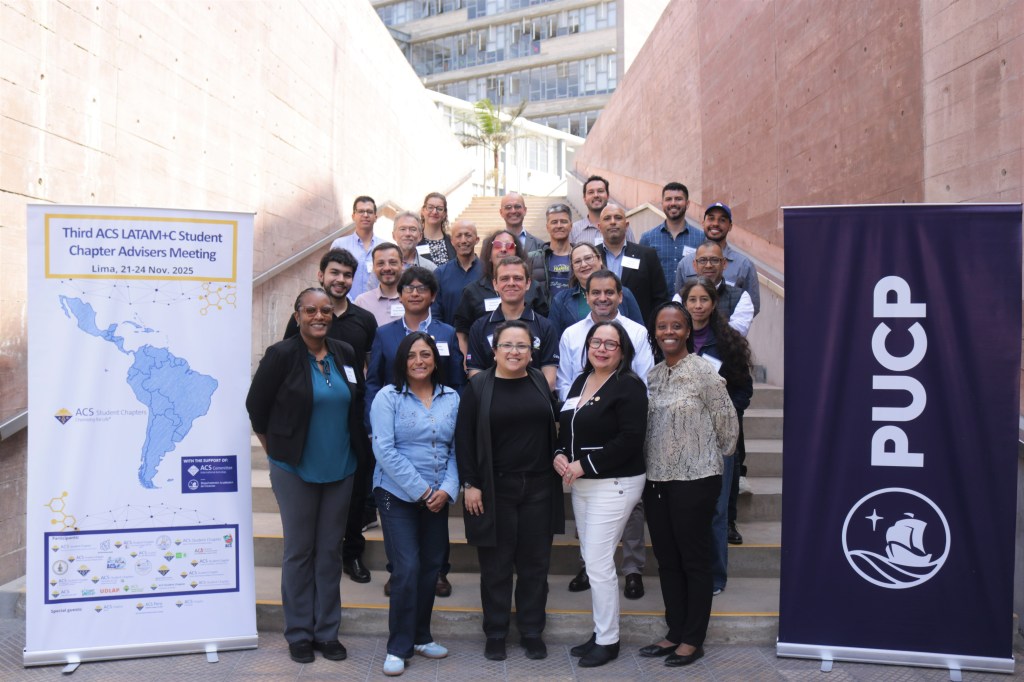
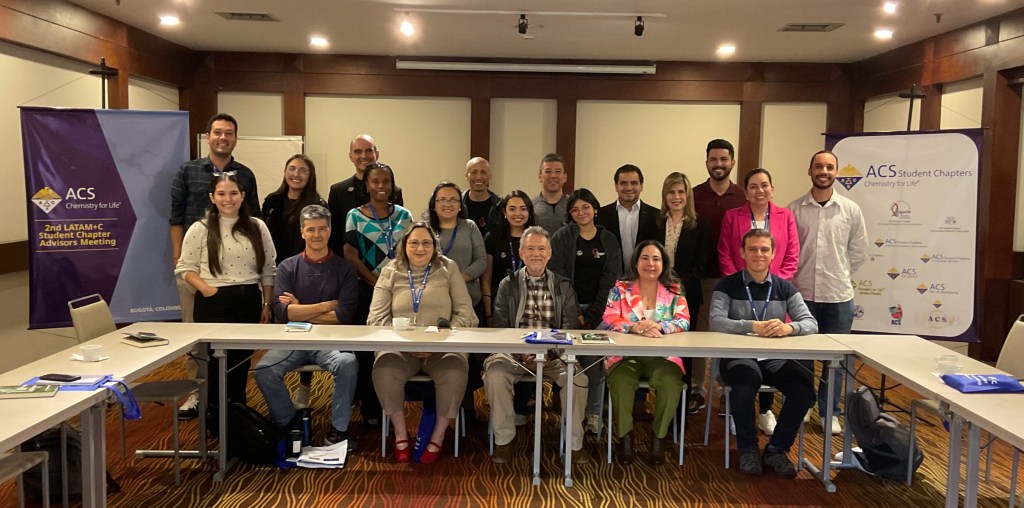
As part of the Organizing Committee and Faculty Advisor of the ACS International Student Chapter at Tecnológico de Costa Rica, I had the opportunity to participate in the III ACS Latin America and the Caribbean Faculty Advisors Meeting. The event took place in Lima, at the Pontificia Universidad Católica del Perú, from November 21st to 24th. The meeting brought together 21 Faculty Advisors from Chile, Peru, Brazil, Costa Rica, Mexico, Colombia, Ecuador, Puerto Rico, Trinidad, and Jamaica.
The aim of the event was to create a space for a better understanding of our roles as Faculty Advisors, the challenges faced within Student Chapters, and the strategies available to better support our students. In addition, we had the honor of welcoming the ACS President, Dr. Rigoberto Hernández, and other ACS staff members. Funding opportunities and international networking were key topics discussed throughout the meeting.
During the event, I delivered a presentation titled Successful networking stories between our Chapters. In this talk, I highlighted internship experiences developed among Latin American ACS International Student Chapters, explained how these collaborations were initiated, and described the logistics involved in making them possible.
Official photo of the meeting attendeesOutside the venue of the meeting
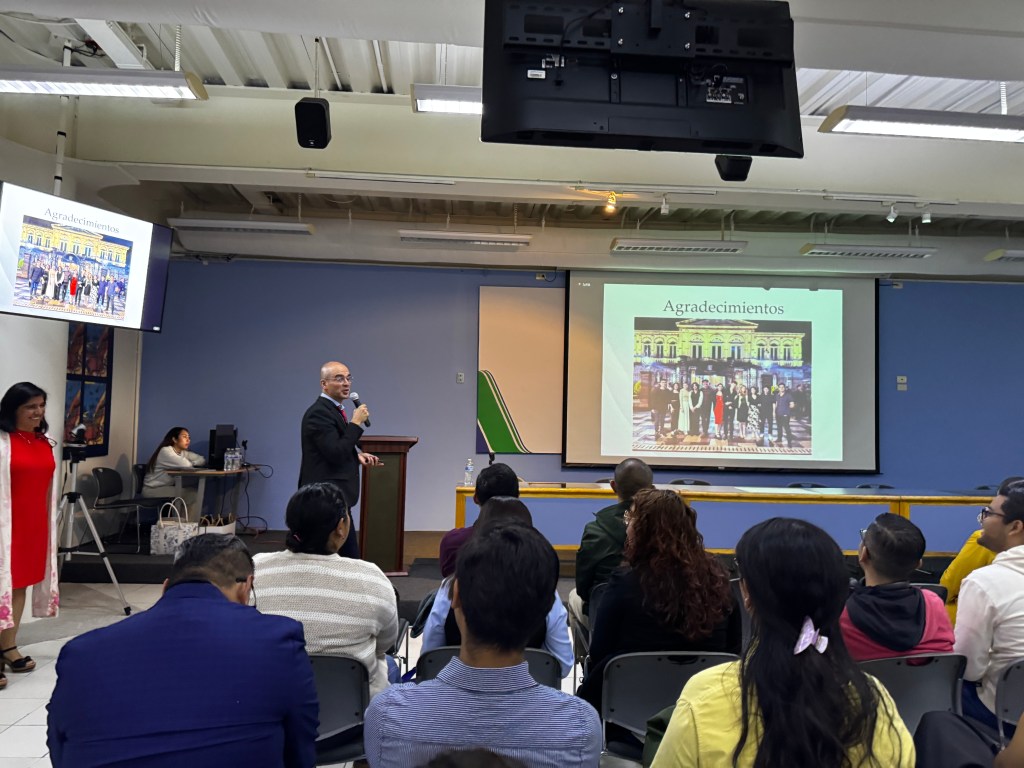
I was honored to accept an invitation from the Mexican Society on Nuclear Magnetic Resonance (SOMERMN) to present the Plenary Lecture at the 11th Experimental NMR Meeting. The event took place at the Universidad Veracruzana in Xalapa on August 28th and 29th.
The lecture entitled Hyperpolarization Phenomena, offered a comprehensive overview of the field, including the fundamental theory, experimental implementation, and diverse applications of hyperpolarization techniques for NMR. I also gave a separate presentation showcasing my research group’s work on applying hyperpolarized 129Xe NMR to challenges in materials science.
The meeting was highly successful, bringing together more than 50 participants ranging from undergraduates to established professors and researchers. The success was driven not only by the quality of the speakers but also by vibrant poster sessions and the broad relevance of the topics covered. With support from sponsors like Bruker, JEOL, and Magritek, the meeting effectively delivered on its goal of providing both theoretical and practical NMR knowledge applicable across scientific disciplines.
Beyond the formal presentations, I enjoyed invaluable opportunities for academic exchange with the Mexican NMR community. It was a pleasure to speak with Dr. Roberto Gil, Editor-in-Chief of Magnetic Resonance in Chemistry, who expressed a strong commitment to supporting the region’s researchers. I am optimistic that these interactions will lead to significant future collaborations.
Finally, I wish to express my profound thanks to the Organizing Committee for their hospitality and for the outstanding program. My special appreciation goes to Dr. Armando Ariza Castolo for his effort and interest before, during and after the event.
During the plenary lecture at Universidad Veracruzana
The VIII Latin American NMR School took place from July 21st to July 25th at the main campus from Tecnológico de Costa Rica (TEC) in Cartago, Costa Rica. It was the first time that the country hold such kind of event, led by Dr. Karla Ramírez-Gualito and me. The VIII LatAm NMR School was sponsored by the International Society on Magnetic Resonance (ISMAR). Thanks to its financial support it was possible to offer three complete grants to Latin American students. Moreover, the event received financial and logistic support from Bruker, JEOL and Magritek.
Students from Costa Rica, Chile, Perú, Jamaica and Puerto Rico attended the NMR School in Cartago. The event consisted in a series of lectures about quantum mechanics in NMR, relaxation theory, applications, and NMR simulations. The lectures were given by NMR experts from Mexico, United States, Israel and Costa Rica. Most of the talks were focus on benchtop NMR and the practical part took place at the School of Chemistry of TEC, using a Spinsolve 60 (Magritek). Furthermore, it was the first time that a poster session took place as part of the NMR School activities, with 8 posters presented by undergrad and grad students from Latin America.
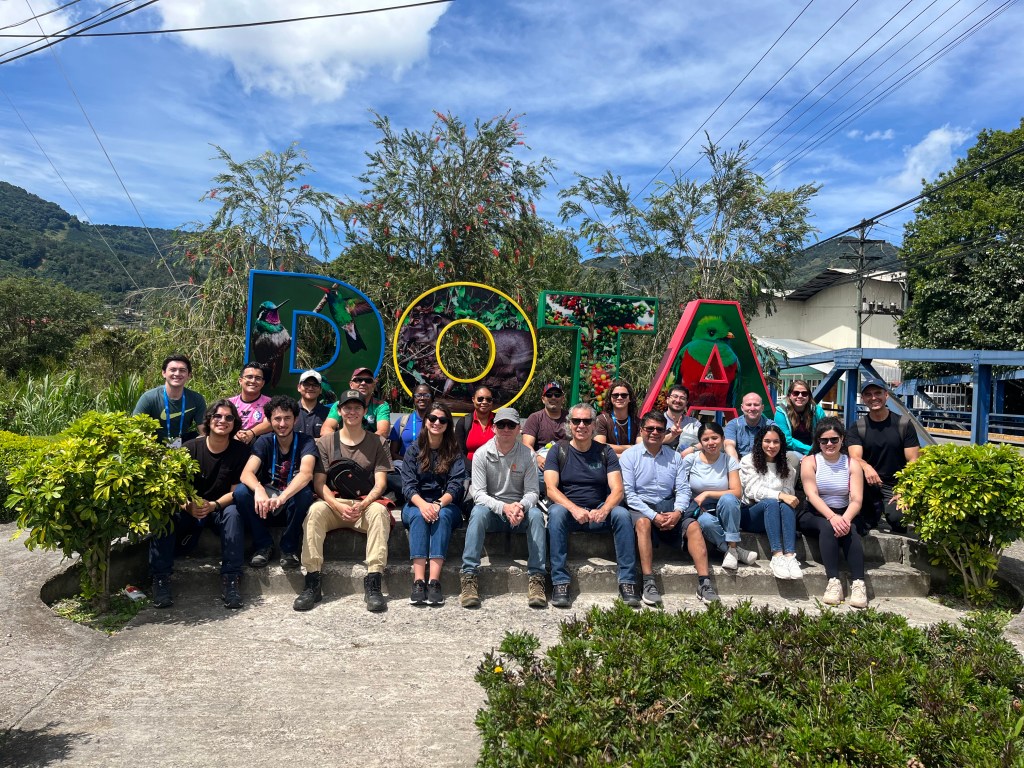
As part of the schedule, a one-day social event took place where attendees visited a coffee farm in the village of Santa María de Dota. The social activity was an excellent opportunity for networking between participants.
The VIII LatAm NMR School was a great success, developed in a respectful and friendly atmosphere, where participants had the opportunity to interact with NMR experts from academia and industry. I am confident that this NMR School will bring new collaborations to foster NMR in our region.
Special thanks to the students Daniel Fernández-Rodríguez and Brandon Ortega-Cordero, both majoring in Engineering Physics at TEC, for their valuable support before and during the event.
Social event in Santa María de DotaDuring the poster sessionDuring one of the NMR School lecturesOfficial picture with most of the NMR School attendees
As part of the bachelor’s thesis of the former student—and now Biotechnology Engineer—Isaac Peña-Romero, we analyzed polyphenols in strawberry leaves using both high-field NMR (750 MHz, Bruker) and benchtop NMR (60 MHz, Magritek). The findings validate the application of low-field NMR for profiling such compounds. Notably, the study highlights the potential of Fragaria × ananassa cultivars Marisol and Festival as promising sources of bioactive polyphenols.
This research was supported by Ley del Cemento N°9829 at Tecnológico de Costa Rica (TEC). It involved the collaboration of Prof. Fabián Villalta-Romero and Prof. Karla Salas-Arias from the Biotechnology Research Center at TEC, as well as Dr. Karla Ramírez-Gualito from Universidad Anáhuac, Mexico. This work is part of a broader initiative uniting research groups committed to democratizing access to NMR technology in Costa Rica and across the region.
The study was published in Pure and Applied Chemistry, the official journal of the International Union of Pure and Applied Chemistry (IUPAC), published by Walter de Gruyter. The journal is currently ranked Q3 in the Chemistry/Multidisciplinary category (Journal Citation Reports).
We warmly invite all interested readers to access and explore our publication. If you are unable to download the manuscript, please don’t hesitate to contact me.
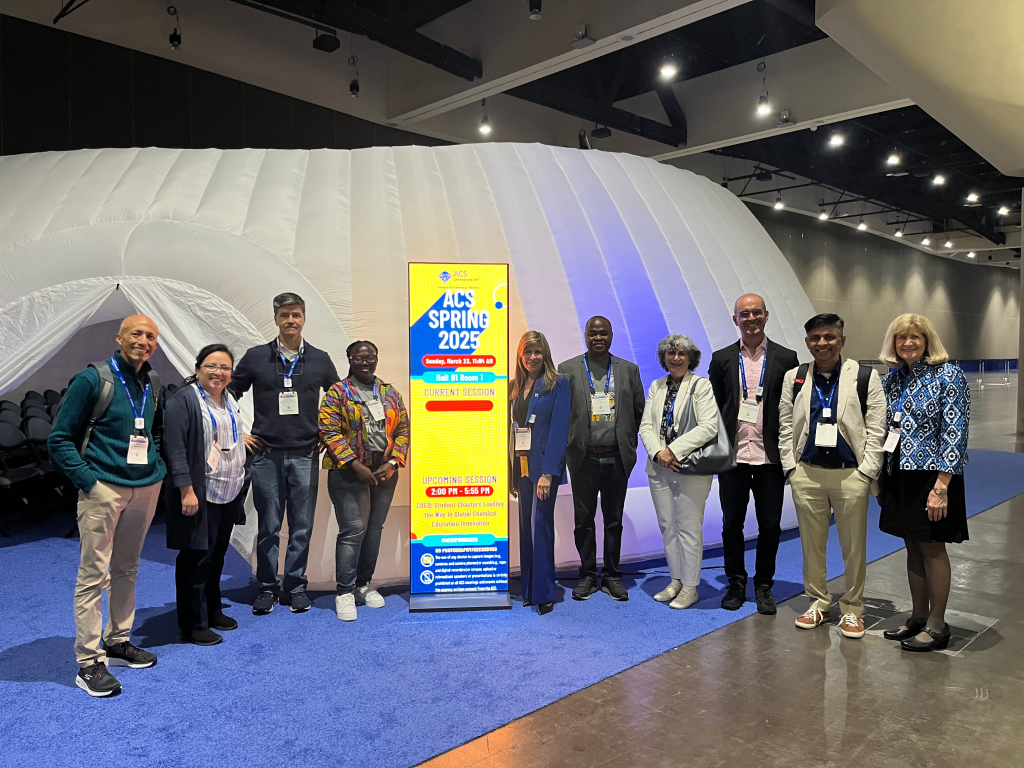
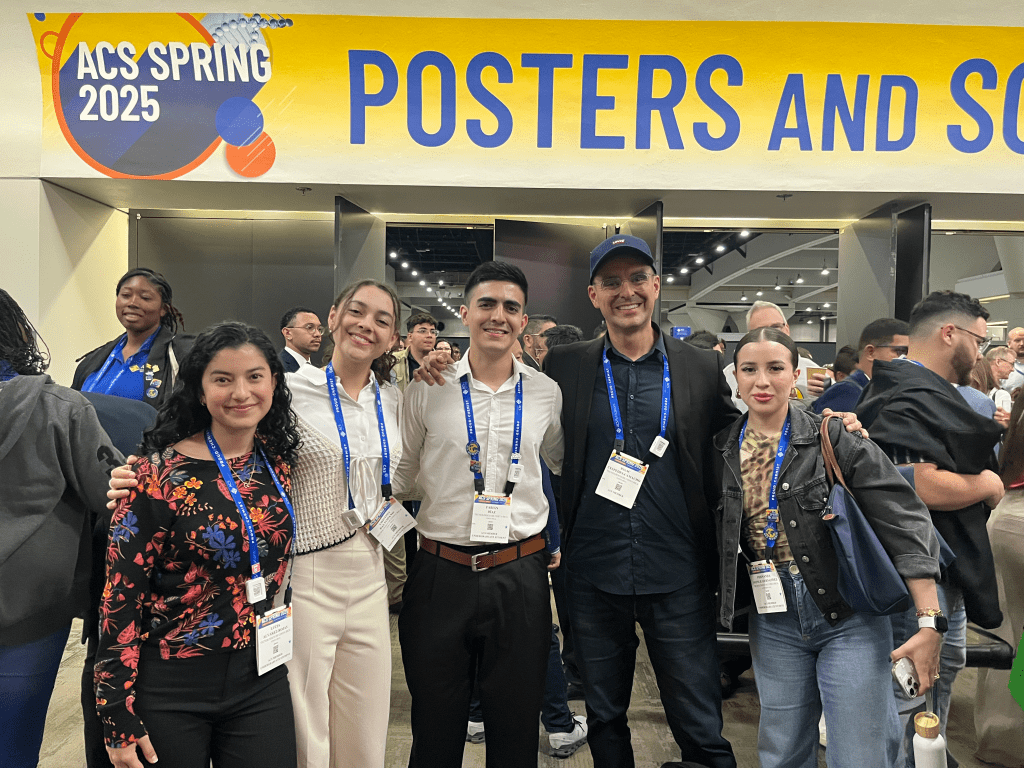
From March 23rd to 27th, I had the privilege of attending, presenting, and actively participating in the American Chemical Society (ACS) Spring 2025 Meeting in San Diego, California. I am deeply grateful to Oficina de Becas at Tecnológico de Costa Rica for their financial support, as well as to the ACS Student Communities Professional Meeting Grant, which enabled two student members from the ACS TEC Synergy Student Chapter to join this incredible event.
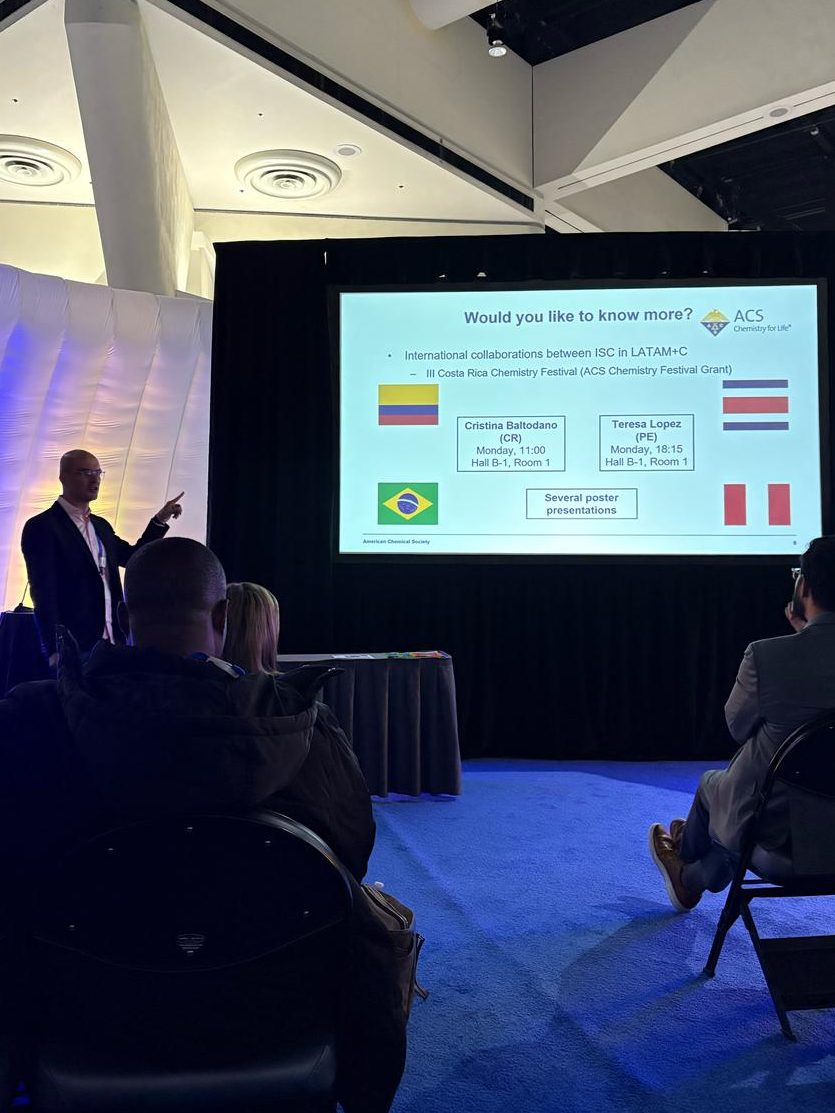
As part of the Division of Chemical Education, I had the honor of co-organizing the symposium “Student Chapters Leading the Way in Global Chemical Education Innovation” alongside Prof. Santiago Sandí-Ureña, Prof. Betty Galarreta, and Prof. Ingrid Montes. During this symposium, I presented my talk, ACS LATAM Student Chapter Advisors Meeting: Strengthening Support for Faculty Advisors and Student Members. Additionally, I had the opportunity to preside over several sessions of the symposium “ACS Chemistry Festivals: A Global, Non-formal Chemistry Education Model: Rationale, History & Impact.”
A highlight of the conference was our ACS Student Chapter receiving the Commendable Award for our work during the 2023-2024 period—a testament to the dedication of our students. Beyond the formal program, I engaged in fruitful discussions with colleagues from Latin America, the U.S., Lebanon, and Ghana, paving the way for exciting future collaborations for both faculty and students.
Speakers of the Chemistry Festival SymposiumWith the ACS TEC Synergy Chapter student membersCelebrating with colleagues from Colombia and BrazilDuring my presentation about the Faculty Advisors Meeting
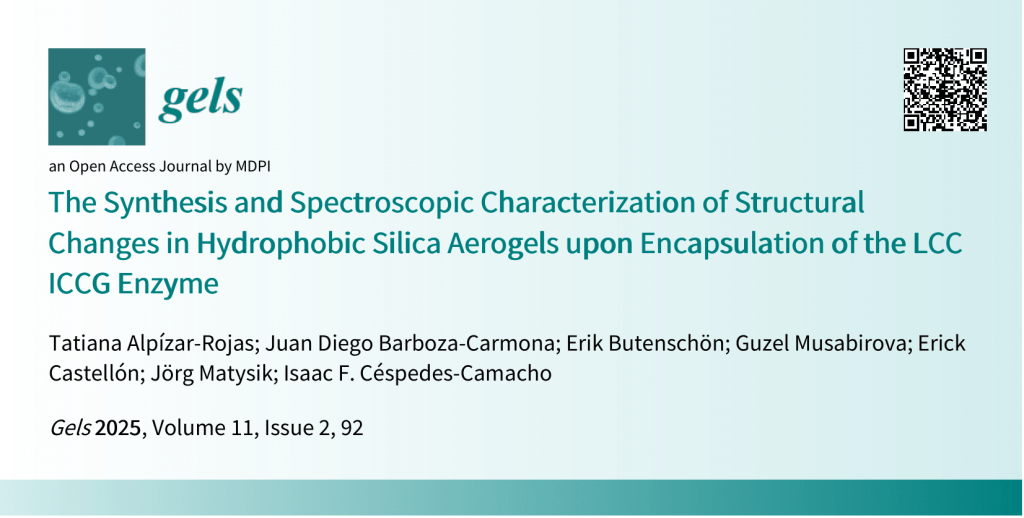
As part of an undergraduate research program funded by the Vicerrectoría de Investigación at Tecnológico de Costa Rica (TEC) and supported by the Centro de Investigación en Protección Ambiental (CIPA), our group is thrilled to announce the acceptance of a research paper in the journal Gels.
This study represents the work of Tatiana Alpízar-Rojas, a Materials Science Engineering student at TEC, who synthesized and characterized a hydrophobic silica aerogel as a carrier for a plastic degrading enzyme. Using a combination of advanced techniques—such as FT-IR, TEM, nitrogen sorption experiments, and 13C, 29Si, and hyperpolarized 129Xe NMR—the team demonstrated how the LCC ICCG enzyme can be successfully encapsulated within the aerogel. The findings show great potential for future environmental applications, particularly on microplastic pollution issues.
This research is the result of an excellent collaboration with Prof. Erik Castellón from the School of Chemistry at Universidad de Costa Rica and the group of Prof. Jörg Matysik from the Institut für Analytische Chemie at Universität Leipzig. Special thanks go to CIPA and the School of Chemistry at TEC for their invaluable support.
Gels is an open-access journal from MDPI, ranked in Q1 for polymer science, and we warmly invite anyone interested to access and explore our publication.
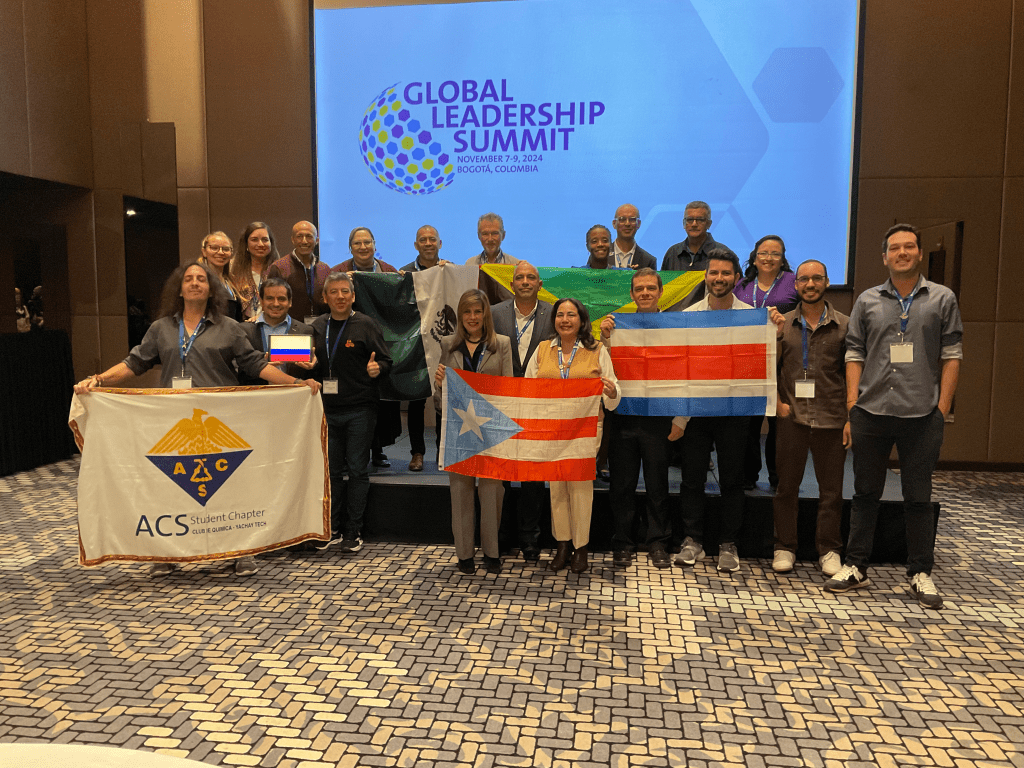
From November 7th to November 11th, I participated in the Latin American Leadership Summit hold in the city of Bogota, Colombia. The summit was organized by the International Activities Committee (IAC) from the American Chemical Society, where more than 60 people people from 9 different countries actively participated. I attended as Faculty Advisor of the ACS International Student Chapter Synergy from Tecnológico de Costa Rica (TEC), together with the student member Cristian Nájera-Obando. On the summit I had the opportunity to present the talk entitled The Faculty Advisors Meeting. From Antigua to Bogotá: what we have done so far, where I showed the main results achieved thanks to the meeting in Antigua last year (i.e., student exchange, access to University facilities, international conference attendance for Latin American students). On the summit it was possible to interact with student leaders from the region, trying to connect our International Chapters and working together to develop our strategic plans.
After the Leadership Summit, I attended the II Faculty Advisors Meeting, which brought together 19 Faculty Advisors from across Latin America and the Caribbean. I had the privilege of serving on the Organizing Committee alongside Prof. Rodrigo Rodríguez (Universidad Pedagógica Nacional, Colombia), Prof. Betty Galarreta (Pontificia Universidad Católica del Perú, Peru), and Prof. Maria da Conceição Ferreira de Oliveira (Universidade Federal do Ceará, Brazil). This meeting provided an excellent opportunity to engage in an informal and collaborative atmosphere, exploring ways to build stronger connections between our International Student Chapters to support the personal and professional development of students in our region. We also attended insightful talks on understanding and engaging with new generations and improving science communication. Exciting new projects are on the horizon in the coming months.
Attendees to the Leadership SummitFaculty Advisors during the Leadership SummitParticipants in the II Faculty Advisors Meeting
With the support of the Centro de Investigación y de Servicios Químicos y Microbiológicos (CEQIATEC) from the School of Chemistry at Tecnológico de Costa Rica, a comprehensive review has been accepted and published online in the national journal Tecnología en Marcha. The paper is written in Spanish to reach a national audience
This review marks the first historical account of NMR (Nuclear Magnetic Resonance) development in Costa Rica, following extensive bibliographic research and interviews with former NMR users. The review is divided into four sections:
1. Introduction: A brief overview of the fundamentals of NMR. 2. Historical Equipment Overview: A detailed citation and technical explanation of all NMR devices installed and used in Costa Rica. 3. Scientific Contributions: A summary of all papers and scientific work conducted in the country since the installation of the first NMR magnet. 4. Current State and Future Prospects: An analysis of the current state of NMR in Costa Rica, along with a list of potential applications aimed at expanding NMR use with innovative perspectives.
I would like to express my sincere gratitude to the student Andrés Borloz-Chinchilla for his hard work and patience during the design, preparation and writing of the review.
On this link you can download and read the paper. Please reach the authors if you have any comment and/or suggestion regarding the information presented on the paper.
From July 23rd to July 26th, Costa Rica hosted the II Costa Rica Chemistry Conference (Chemistry: A Solution for Global Problems), supported by the Chemistry Departments of the five national public universities and the Colegio de Químicos de Costa Rica. The conference also received endorsement from the International Union of Pure and Applied Chemistry (IUPAC). It was held in the Auditorio Cora Ferro Calabrese at Universidad Nacional in Heredia, Costa Rica.
As President of the Scientific Committee, I am deeply grateful for the support of my colleagues and the other committees. Thanks to this collaboration, we surpassed the number of attendees from the previous conference, indicating that our event is gaining recognition both nationally and internationally.
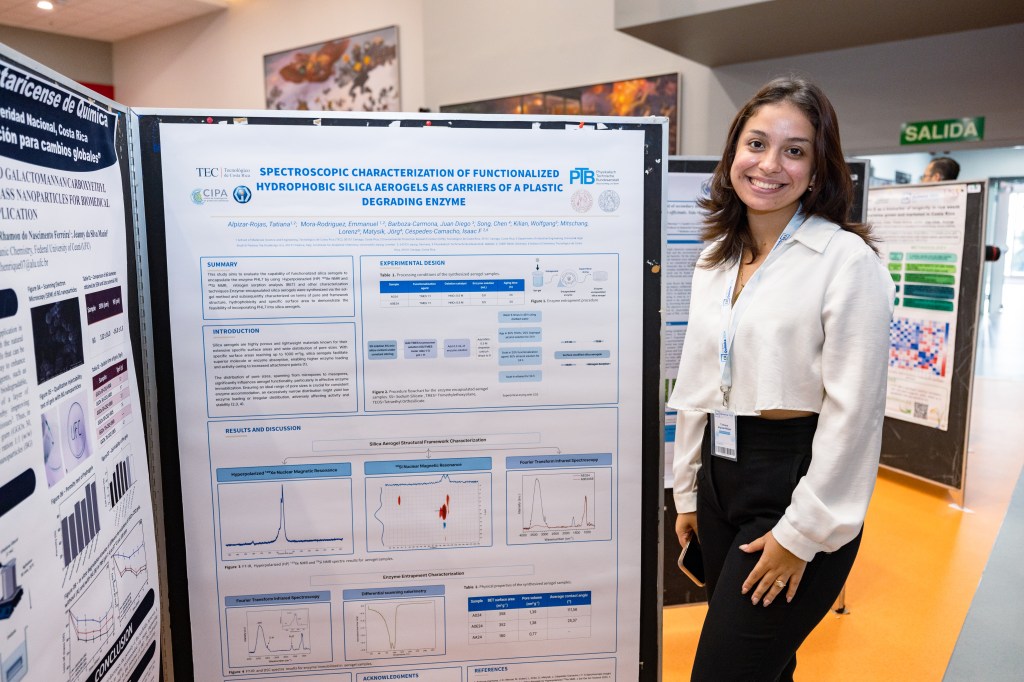
The conference was sponsored by ACS Publications and the Chemical Abstract Service (CAS), Bruker, JEOL, Magritek, Scanco, INBOX, and G&H Steinvorth. Also, this was the first time all plenary talks and most general talks were presented in English. The event featured international speakers from Brazil, Peru, Colombia, Mexico, USA, Canada, Germany, and Spain. We also welcomed many undergraduate and graduate students who presented oral communications or posters. For instance, Tatiana Alpízar-Rojas from my research group presented part of her work on aerogel/enzyme characterization. Additionally, I delivered an oral communication titled NMR Hyperpolarization Techniques in Costa Rica, showcasing our group’s achievements and ongoing projects.
I am pleased to announce that the III Costa Rica Chemistry Conference will be held at Tecnológico de Costa Rica in 2026. I invite everyone to save the date. We will work hard to organize an outstanding conference in Cartago, aiming to match or exceed the success of this year’s event.
Tatiana Alpízar-Rojas presenting her poster during the conferenceDuring the inauguration of the II Costa Rica Chemistry Conference Moment where I gave a present to Dr. Rafael Gómez-Bombarelli on the name of the OrganizersConference pciture at the entrance of the main venue








 Prof. Isaac F. Céspedes Camacho